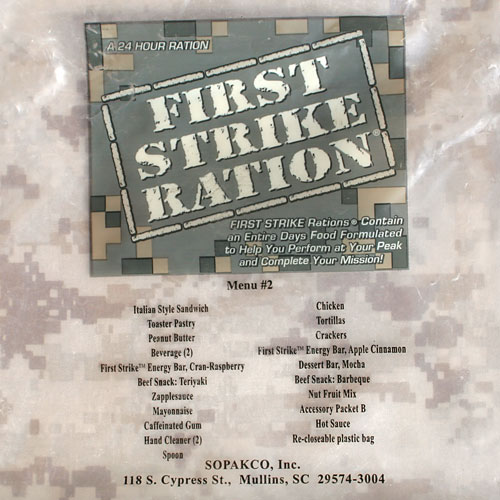
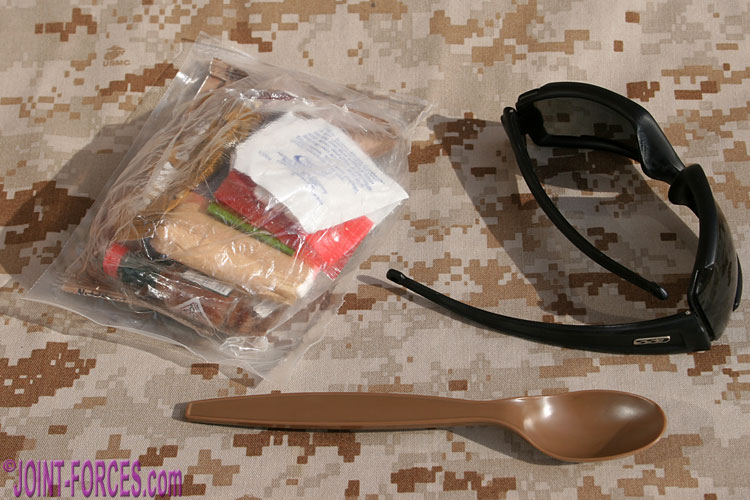
In this Field Rations article, to preserve the time-line, we are temporarily breaking the MRE series to look at the US First Strike Ration issued around 2010/11, writes Bob Morrison.
~
The First Strike Ration or FSR is intended to provide full nutrition for a 24-hour period but, unlike the Meal Ready to Eat or MRE and many other similar combat rations, it is not supplied on a conventional three individual meals a day basis. Introduced in basic three Menu format in 2007 and expanded to nine Menus from 2011, the original FSR was primarily issued to US troops serving in forward operational areas of Afghanistan including Helmand Province.
In response to the logical question of why is it needed when the Americans already have the proven MRE, the US DoD stated that the ration pack was designed to improve tactical mobility and to meet the manoeuvre sustainment needs of the warfighter during first to fight and high intensity conflicts. The communiqué went on to explain that the FSR “takes advantage of major advancements in food processing, preservation, nutrient delivery, and packaging technologies to include innovative methods in intermediate moisture foods, glucose optimisation, and novel packaging materials and configurations.”
One benefit incorporated in the FSR was innovative packaging technologies which enabled the dried specialist sports-type beverages in the new ration to be reconstituted and consumed directly from the (bottle shaped) drink pouch meaning little time was lost in preparation so therefore it was more likely they would be drunk rather than discarded and the nutrients in them would be taken. Other key benefits included a minimum two year ration shelf life at 27C (80F) and provision of an average of 2900 calories per day in a pack size which was roughly half the volume and mass of one day’s issue of three MRE rations.
The example featured here is first contract batch Menu 2, which many considered to be the best of the three originals due to its varied contents that were acceptable to just about everyone, though with just three Menu choices at that time the FSR made no major provision for those with special dietary needs.
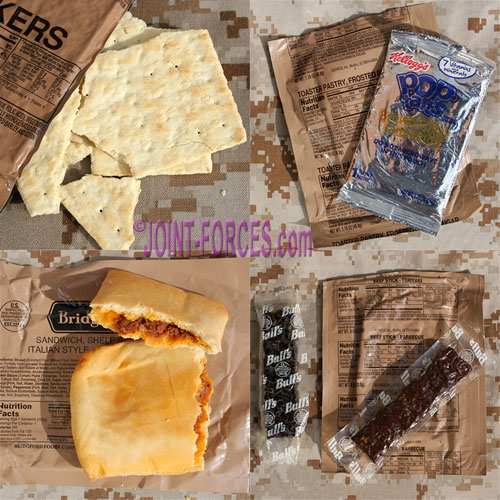
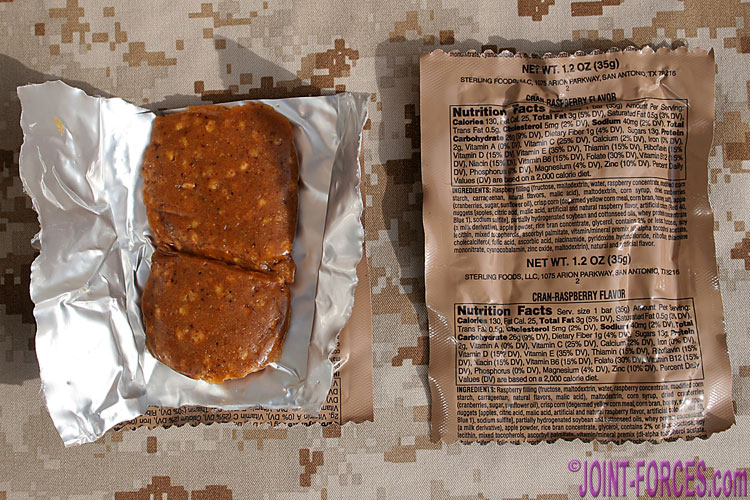
Each pack also contained wheat snack bread or crackers, with cheese spread or peanut butter, a pouch of mixed fruit and nuts with sunflower seeds and two beef jerky bars in BBQ or Teriyaki flavour. There were two ERGO energy drinks in shaped zip-lock drink pouches which needed to be reconstituted with drinking water, a pouch of CHO-enhanced apple sauce and a pack of commercial caffeinated chewing gum. Salt, sugar, matches, tooth-cleaning gum, toilet tissue and three moist cleansing towelettes were included in the accessory pack along with a sachet of either lemon tea, coffee or cider powder.
“The ration pack was basically a large collection of snacks and its components ideally fit into pockets – I just placed them in the pockets of my body armour. When I got hungry during patrols I could just take items out and have a bite.
“Regarding the taste, if you like the US MREs you will also like the First Strike Ration. I think the sandwich and toast items taste similar to some of those snack pizza things you can get at fuel stations.”